
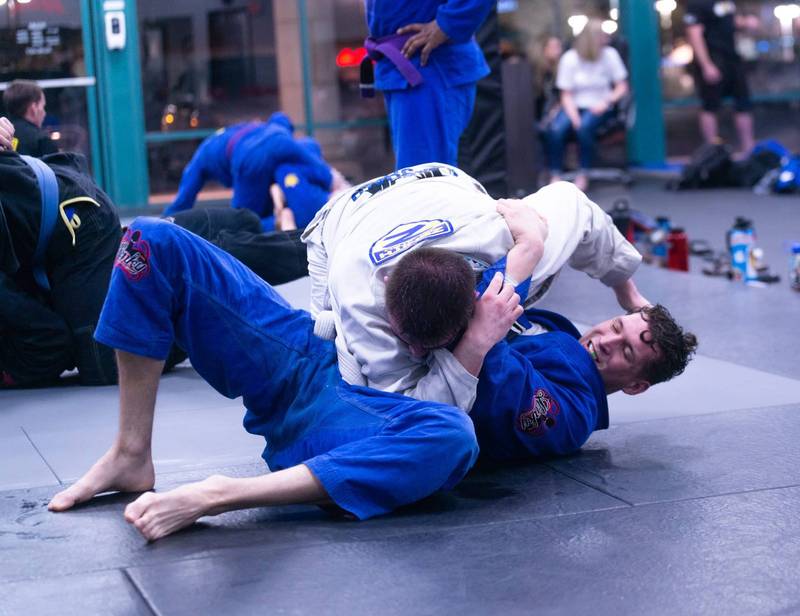
Every new grappler runs into this question in week one, usually phrased as "do I have to buy the pajamas." Here is the difference and why it matters.
The gi
A gi, or kimono, is the two piece uniform you wear when training Jiu Jitsu: a heavy cotton jacket, drawstring trousers, and a belt indicating rank. In gi training you are allowed to grip the fabric, your own and your partner's, which changes the game completely.
Gripping fabric means more control, slower positions, and an enormous library of collar and sleeve techniques, including collar chokes that simply do not exist without a jacket. Because everything is slower and harder to escape by explosive movement, the gi is where technical precision gets built.
No gi
No gi is trained in a rash guard and shorts or spats. No fabric to grip, so control comes from underhooks, wrists, head position and body connection. It is faster, sweatier and more scramble heavy. Wrestling and leg locks feature far more prominently.
No gi is closer to what a real physical altercation looks like, since nobody is wearing a heavy jacket you can choke them with, and it is the format of most modern professional grappling competition.
Which should a beginner start with?
Most instructors will tell you the gi, and the reasoning is sound.
The gi slows everything down. When you cannot escape a bad position by being sweaty and explosive, you have to escape it correctly, which means you actually learn the mechanism instead of a workaround. A beginner who starts in the gi tends to end up with better fundamentals: better posture, better frames, better understanding of why a position works.
It also travels in one direction more easily than the other. A good gi player usually adapts to no gi within a few months. A no gi specialist stepping into a gi for the first time is frequently lost, because there is an entire dimension of grips they have never dealt with.
That said: if the only thing keeping you off the mat is not wanting to wear a gi, train no gi. Getting started matters more than optimizing the order.
You do not have to choose
Most people who train for any length of time end up doing both, and the two feed each other. The gi builds the precision and the patience; no gi builds the scrambling, the wrestling and the pace. Skills cross over in both directions, and the gaps each one leaves are exactly what the other one fills.
What to buy, and when
Nothing, at first. For a trial class, board shorts or workout shorts and a t-shirt with no zippers or buttons covers you, and many academies keep clean loaner gis if you want to try one.
If you decide to stay:
- One entry level gi. Do not buy a premium gi as a white belt. Get the size right, wash it after every single session, and hang it to dry.
- A rash guard and shorts if your gym trains no gi. A rash guard is not vanity, it reduces mat burn and skin contact.
- A mouthguard.
- Sandals for getting to and from the mat.
Your belt comes with your rank. You will be given a white belt to start.