
The honest version, including the parts that martial arts marketing leaves out.
Where Jiu Jitsu is genuinely excellent
It works when you are smaller. This is the founding premise and it holds up. Leverage and technique over size and strength means a trained smaller person can control an untrained larger one. Very few physical skills scale that way.
Most fights end up on the ground. Not always, but often, and an untrained person on the ground is completely helpless. Being the only one who knows what to do there is an enormous advantage.
It offers graduated responses. This is the most underrated part. Jiu Jitsu lets you control someone without hurting them, which matters when the aggressor is a drunk relative, a person in crisis, or a teenager on a school field. Striking arts give you mostly one option, and that option has legal and moral consequences.
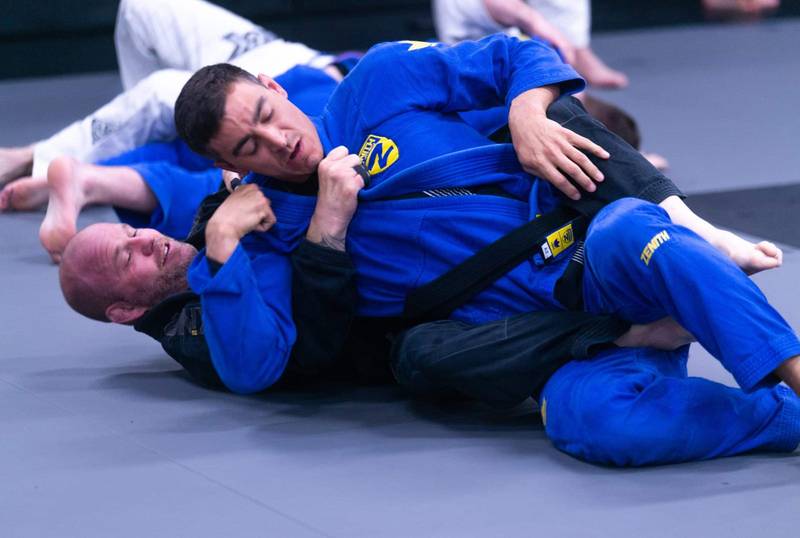
You practice against full resistance. Every session you train against someone genuinely trying to stop you. That is the single biggest divide between martial arts that work under pressure and martial arts that do not, and it is why Jiu Jitsu practitioners rarely have illusions about what they can do.
It works when someone has already grabbed you. Which is what most real assaults, and virtually all schoolyard conflict, actually look like.
Where it has real limits
Multiple attackers. Going to the ground with one person while a second is standing is a bad outcome. Jiu Jitsu does not solve this and no honest instructor claims otherwise.
Weapons. Grappling range is the worst possible range for a knife. Awareness, distance and leaving are the answer, not technique.
Hard surfaces. Mat skills assume a mat. Concrete changes the calculus of taking someone down and of being taken down.
Sport habits. Some competition positions, pulling guard being the obvious one, are actively bad ideas outside a tournament. Sport training builds fantastic attributes and a small number of habits worth consciously discarding.
Sport Jiu Jitsu versus self defense training
Most academies, ours included, train predominantly sport Jiu Jitsu. That is worth being clear about rather than pretending otherwise. But the gap is smaller than it is often made out to be, for one reason: the core of self defense is positional control, and that is exactly what sport Jiu Jitsu drills relentlessly against resistance.
Someone who can consistently pass guard, take the back and hold mount against a resisting training partner has the thing that actually matters. The self defense specific layer, dealing with someone standing over you, defending strikes from bad positions, escaping and disengaging rather than staying to finish, is a set of adjustments on top of that base, and it is taught through controlled sparring and technique practice as it comes up.
What you should be suspicious of is the reverse: schools that teach only "self defense techniques" and never train against genuine resistance. Technique that has never been pressure tested is a theory.
The realistic summary
Jiu Jitsu is one of the most effective self defense skills an average person can learn, particularly for someone who is not big or strong. It is not a complete answer to violence. Nothing is.
The largest real world benefit is usually not any technique at all. It is that people who have spent time being genuinely uncomfortable with a resisting opponent stop having anything to prove, become far better at reading a situation, and are much more willing to simply leave. The best self defense outcome is the fight that does not happen, and Jiu Jitsu produces that disposition more reliably than almost anything else.